Where should you place an air purifier for the best results? Location matters more than you think. Proper air purifier positioning can increase your purifier's effectiveness by up to 2.5 times, while poor positioning severely limits performance. Whether you're wondering where to put your air purifier in your bedroom, if closed doors help, or how far from the wall it should be, this guide has answers.
Not sure which air purifier is right for your space? Take our 5-question quiz to get personalized recommendations based on your specific needs.
Why air purifier placement matters
Before diving into specific room placements, it's important to understand why location makes such a dramatic difference in performance.
The science behind airflow and circulation
Air purifiers work by drawing in contaminated air, filtering it through multiple layers (typically including a pre-filter, HEPA filter, and activated carbon filter), and then releasing clean air back into the room. This creates a continuous circulation pattern that gradually improves air quality throughout the space.
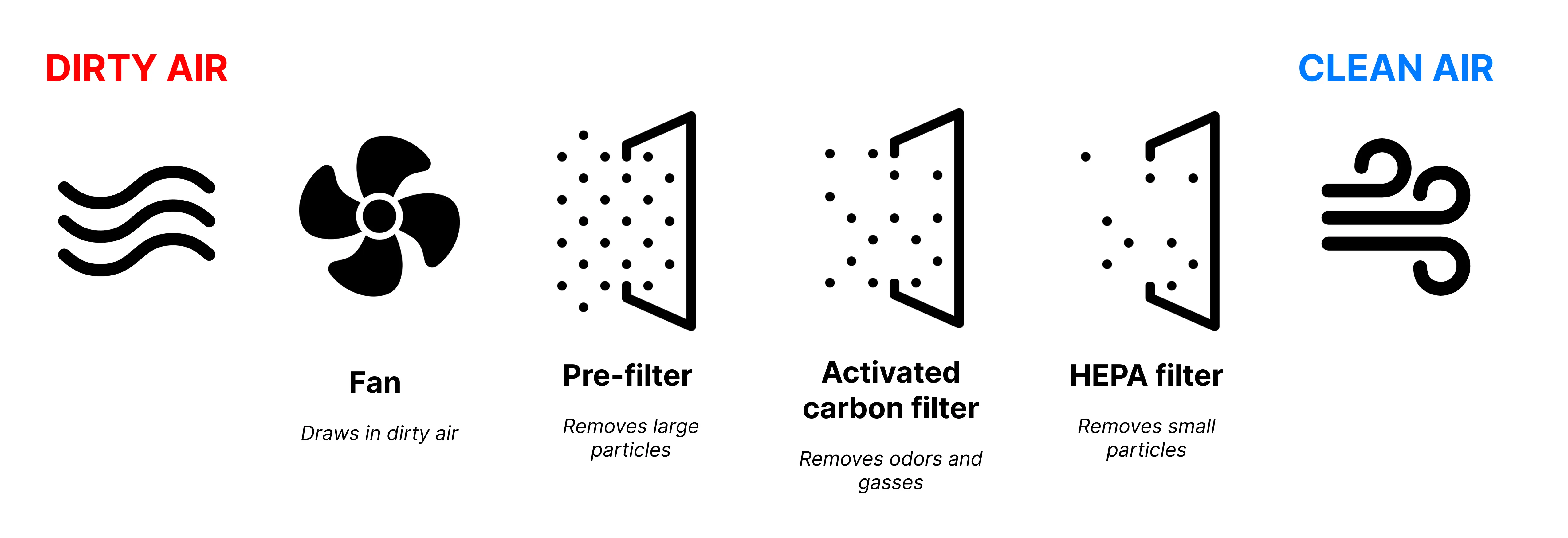
The key word here is "circulation." For your air purifier to work effectively, air needs to move freely around the room and through the device. Any obstruction that blocks the intake or output vents disrupts this circulation and reduces efficiency.
Air purifiers need space to breathe. They draw in air through intake vents and push out clean air through outlets. When these vents are blocked by walls, furniture, or other objects, the purifier can't pull in or circulate air effectively, which significantly reduces performance.
Golden rules: Where to place your air purifier
These universal principles apply regardless of which room you're trying to clean.
Rule #1: Keep it away from walls, corners, and obstructions
Your air purifier needs breathing room. Maintain at least 6-12 inches of clear space around all sides of the unit to allow for unimpeded air intake and output. This distance gives the purifier space to pull air from a wide area and push clean air throughout the room.
Corners are particularly problematic because they restrict airflow from multiple directions. When clean air gets trapped in a corner, it can't circulate through the rest of the room effectively. Instead, position your purifier in a more central location where it can access air from all directions.
Make sure nothing blocks the air purifier's intake or outlet vents. Furniture, curtains, and walls all stifle circulation and reduce effectiveness. Even decorative items placed on top of the unit can block the outlet and prevent clean air from dispersing.
Rule #2: Elevate for better circulation
While not strictly necessary, elevating your air purifier 3-5 feet off the ground can improve performance. This height allows the unit to intercept air that moves both horizontally and vertically due to temperature changes and natural air currents in the room.
Placing your purifier on a nightstand, dresser, or sturdy table puts it in the ideal range. If you're short on surface space, wall-mounted models offer the benefits of elevation without taking up floor or furniture space.
That said, if your primary concern is capturing allergens like dust and pet dander (which tend to settle near the floor), keeping the unit on the ground may be more effective. Consider your specific air quality goals when deciding on height.
Rule #3: Position near pollution sources when possible
If you're dealing with a specific source of air pollution (like a litter box, cooking odors, or smoke) consider placing the purifier between the pollution source and where you spend most of your time. This strategic positioning allows the unit to capture contaminants before they spread throughout the room.
Do air purifiers work better in closed rooms?
This is one of the most common questions people have, and the answer is more nuanced than a simple yes or no.
Should you close windows when using an air purifier?
Air purifiers are unquestionably most effective when doors and windows are closed. This allows the unit to systematically clean the air without fighting a constant influx of outdoor pollutants.
However, tests show that even with windows open, air purifiers still reduce indoor pollution by about 60% within 20 minutes.
Should you close the door when using an air purifier?
It depends on your situation.
Close the door if:
- You want maximum cleaning efficiency in one room
- Your purifier is sized for that specific room
- You're targeting pollutants in that space (like pet dander or cooking odors)
Leave the door open if:
- You're using one purifier for multiple connected rooms
- You need air circulation to prevent CO₂ buildup (especially in bedrooms overnight)
- Your purifier is powerful enough to handle a larger area
Where to place your air purifier in every room
Different rooms have different air quality challenges and layout considerations. Here's how to optimize placement for each space in your home.
🛏️ Where to place your air purifier in your bedroom
Your bedroom deserves special attention because you spend roughly a third of your life there. Clean air while you sleep can lead to better rest, reduced allergy symptoms, and improved overall health.
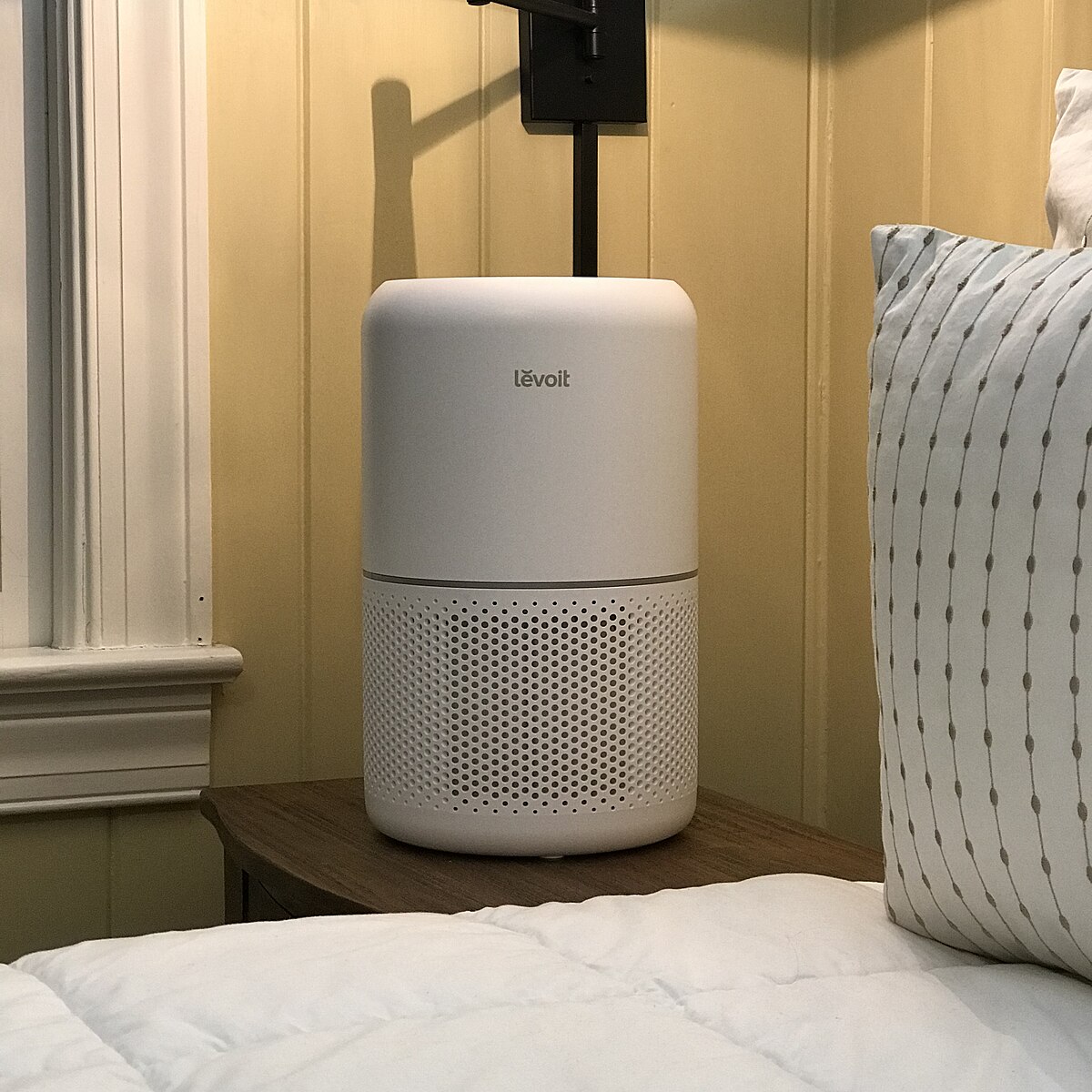
“Air Purifier (Levoit Core 300) (49318249796)” by Home Air Quality Guides is licensed under CC BY-SA 2.0.
Optimal bedroom placement:
- Position the air purifier within a few feet of where you sleep
- Place it between your bed and any windows to intercept outdoor pollutants
- Avoid directing the airflow directly at your face, which can be disturbing
- Keep it on a nightstand or dresser if space allows (3-5 feet elevation is ideal)
- Run it for an hour before bedtime to pre-clean the air
Noise is a consideration in bedrooms, but most quality air purifiers produce only 20-48 decibels on low settings, about the sound level of a quiet library. Many people find the gentle hum soothing and similar to white noise.
🛋️ Where to place your air purifier in your living room
Living rooms are often the largest spaces in the home and may be open to other rooms, which adds complexity to placement decisions.
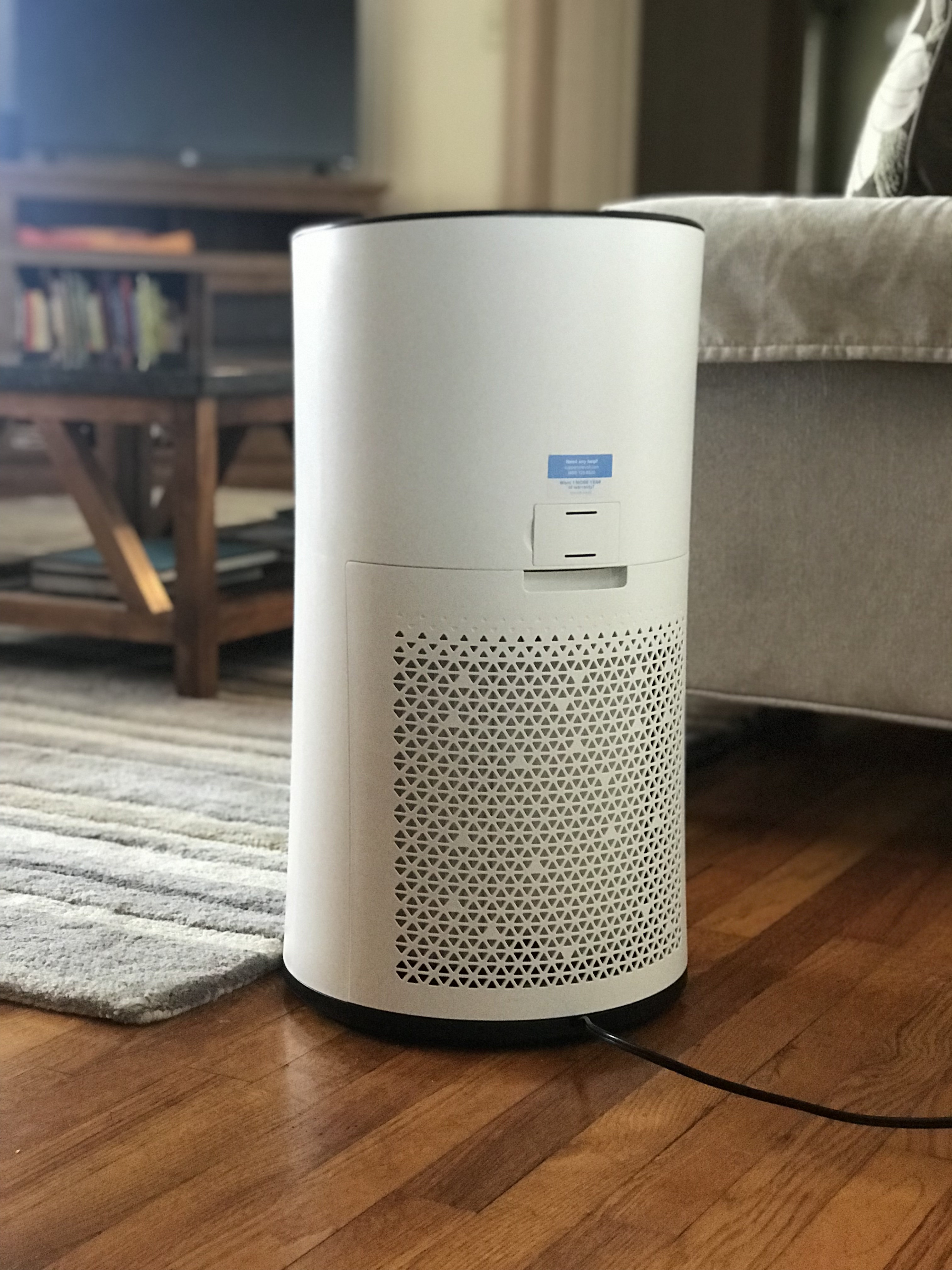
”Air Purifier (Levoit LV-H133) (49318568107)” by Home Air Quality Guides is licensed under CC BY-SA 2.0.
Best practices for living rooms:
- Place the unit in a central, open location with access to the whole room
- Position it near key seating areas like the couch, but not so close that furniture blocks the vents
- Keep it in high-traffic areas where air naturally circulates more
- If your living room connects to other spaces, position the purifier to benefit multiple areas
- Avoid placing it in the corner or behind large furniture
If your living room is particularly large or open-concept, you may need a more powerful unit or multiple purifiers to adequately cover the space.
🍳 Where to place your air purifier in your kitchen
Kitchens present unique challenges because cooking generates significant air pollution: particulates from frying, gases from gas stoves, and various odors.
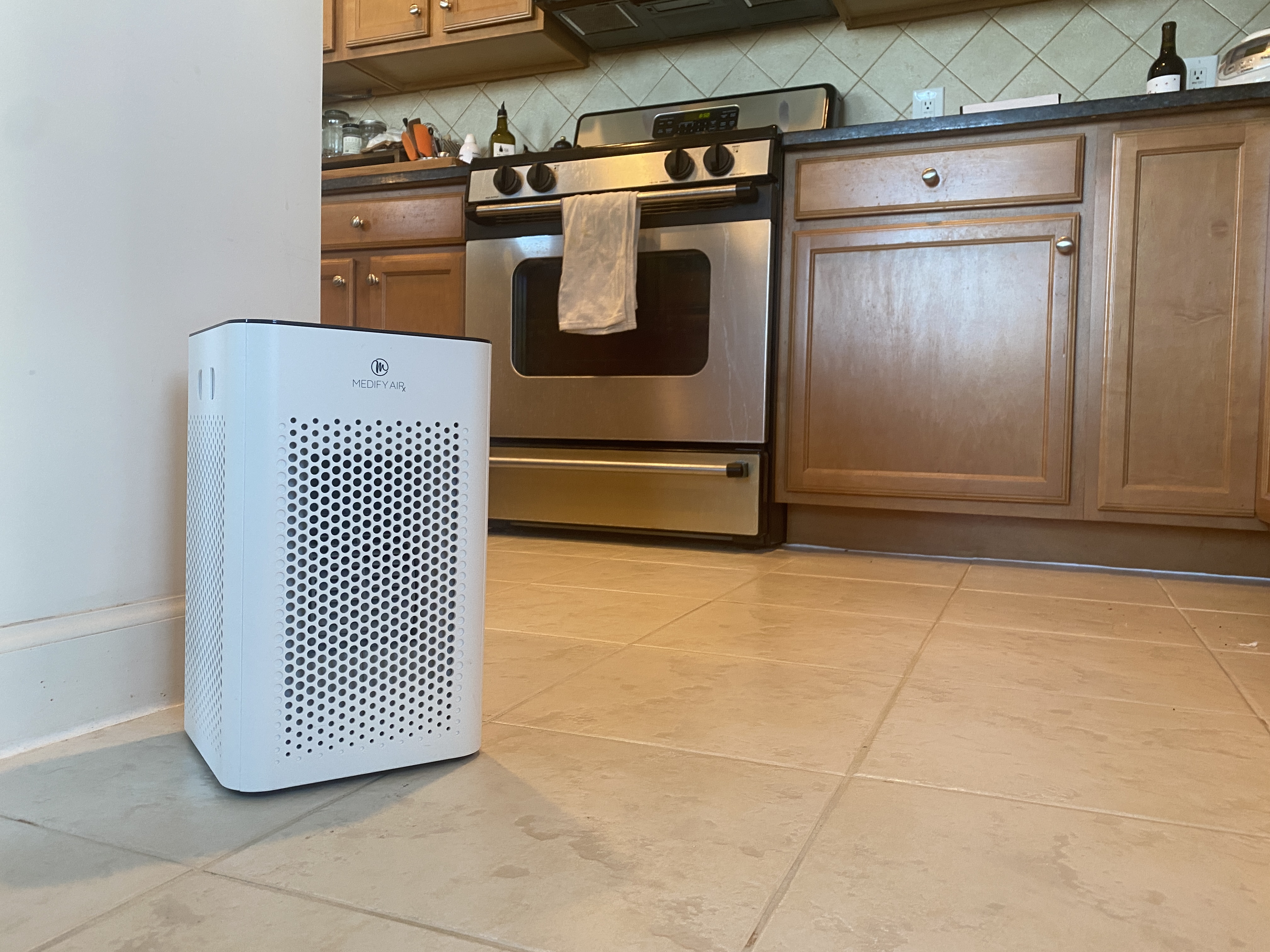
Kitchen placement tips:
- Position the purifier away from the stove but in the same room
- Place it in areas with the least natural ventilation
- Use a unit with a strong activated carbon filter to handle cooking odors
- Never place it directly next to heat sources or in areas where it could get splattered with grease or liquids
Remember that proper kitchen ventilation (range hoods, exhaust fans, open windows) is your first line of defense. Air purifiers complement but don't replace good kitchen ventilation.
🏠 Where to place your air purifier in your basement
Basements, garages, and other seldom-used spaces have their own air quality concerns, typically related to poor ventilation, musty odors, and potential mold issues.
For basements and similar spaces:
- Place the purifier in the center of the largest area to promote air mixing
- Keep it away from moisture sources
- If you have a moisture problem, address it first. Air purifiers can't remove active mold or fix humidity issues
- Run it continuously since these spaces often have stagnant air
- Consider a more powerful unit since basements are often difficult to ventilate
Important note: If you have radon in your basement, an air purifier won't help. Radon requires a specialized mitigation system that vents the gas outside.
🏢 Other room considerations
- Home office: Place it near you, away from direct drafts, and not under your desk.
- Pet areas: Position the purifier close to where your pet spends most time, but avoid directing airflow at them. Place it near litter boxes or pet beds.
- Nursery: Keep it elevated and out of reach, positioned near the crib but not directly blowing on the baby. Choose the quietest setting possible.
Common air purifier placement mistakes
Avoid these frequent errors that compromise your air purifier's effectiveness:
Mistake #1: Tucking it in corners
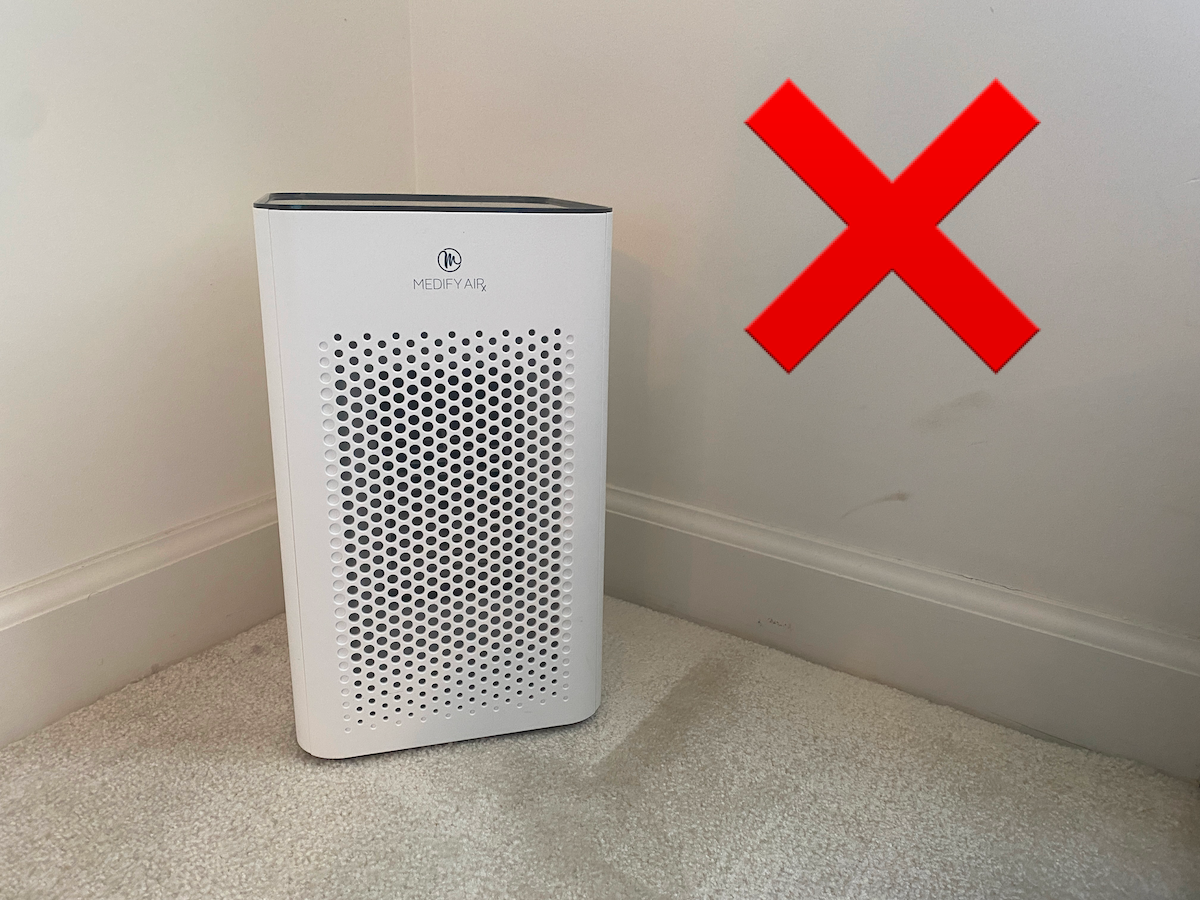
Corners are the worst place for an air purifier. They limit air access from multiple directions, trap clean air in one spot, and prevent proper circulation throughout the room. If your only option is a corner, at least pull the unit a few feet away from both walls.
Mistake #2: Placing too close to walls
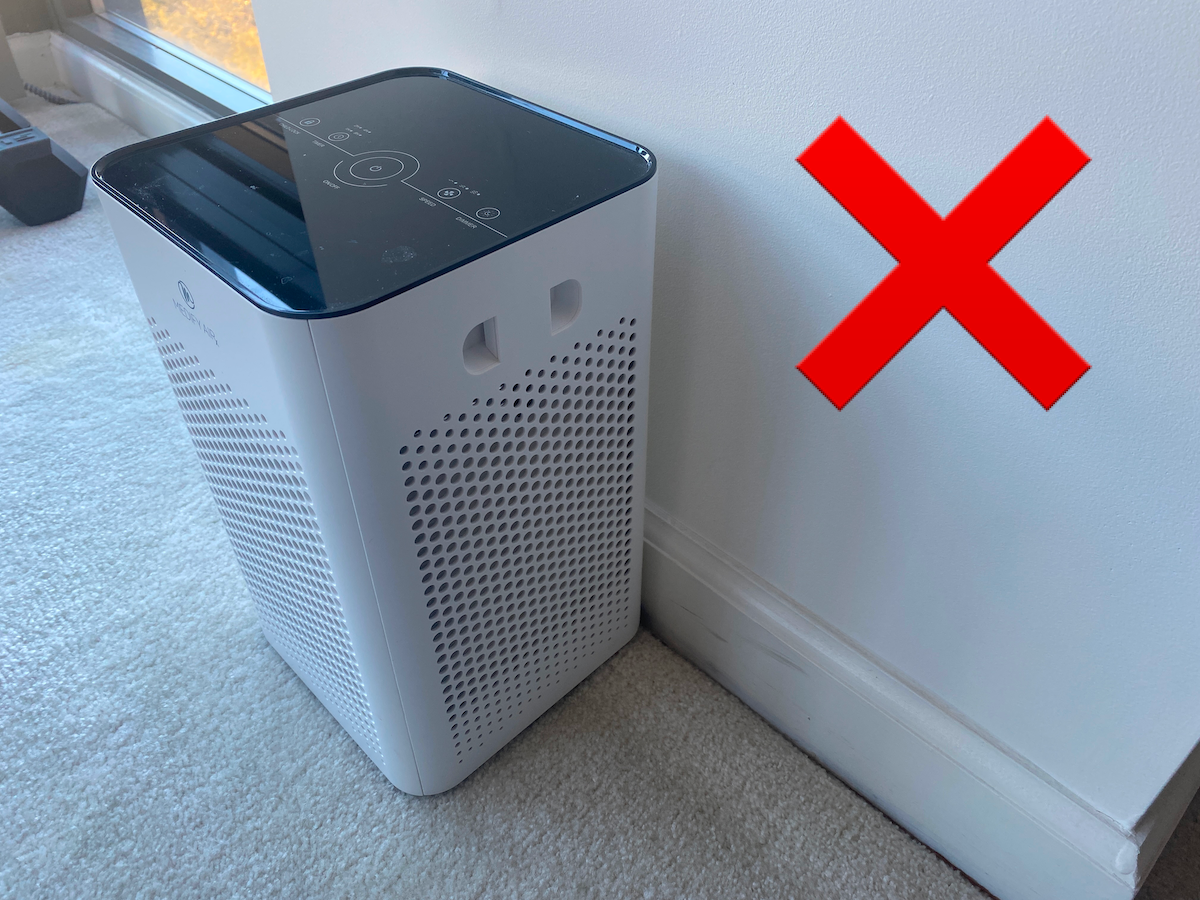
Remember that statistic: placing an air purifier flat against a wall reduces airflow to just 5%. Even a few inches of clearance makes an enormous difference. Always maintain several inches of space between the unit and any wall.
Mistake #3: High-moisture areas
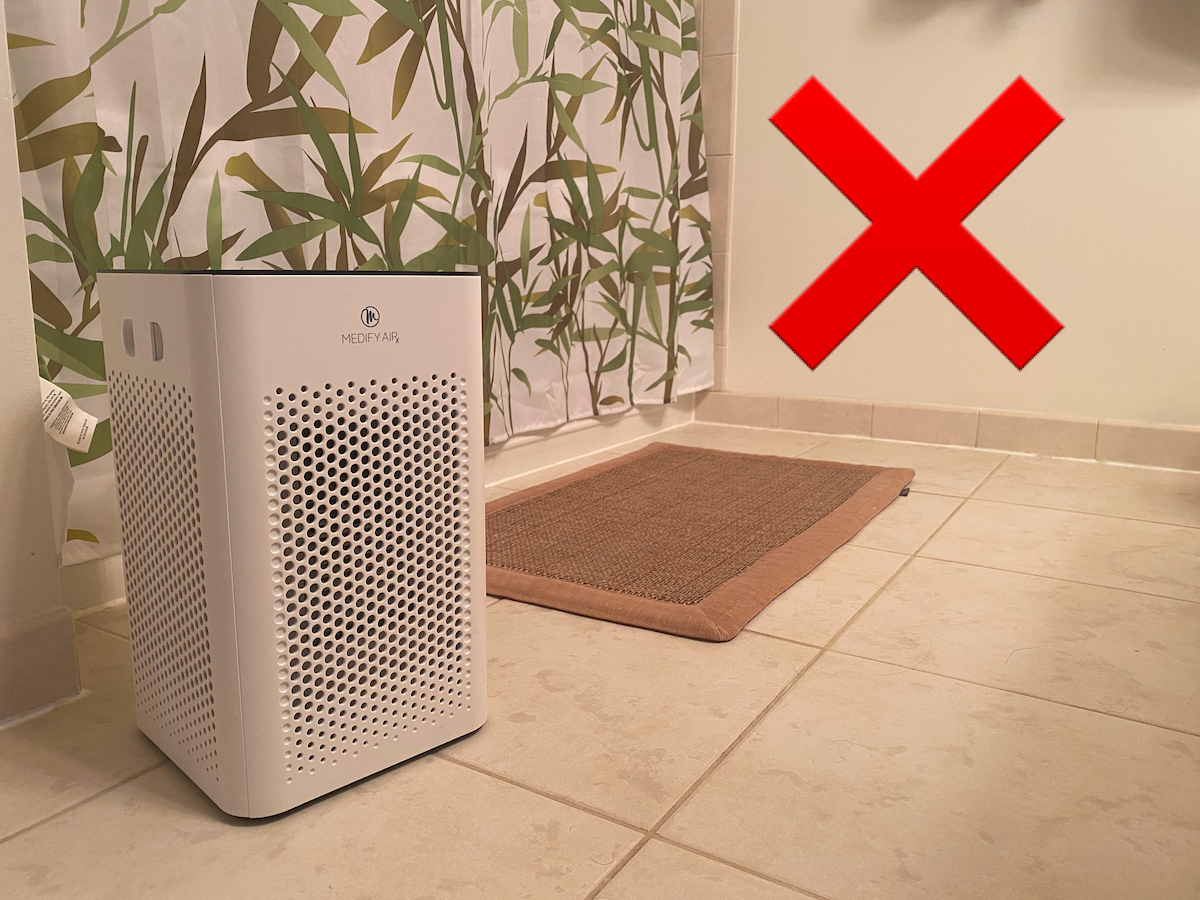
Never place air purifiers in bathrooms, right next to humidifiers, or in damp basements without addressing the moisture issue first. Water can damage the filters, create mold inside the unit, and significantly reduce effectiveness.
Mistake #4: Hiding it behind furniture or décor
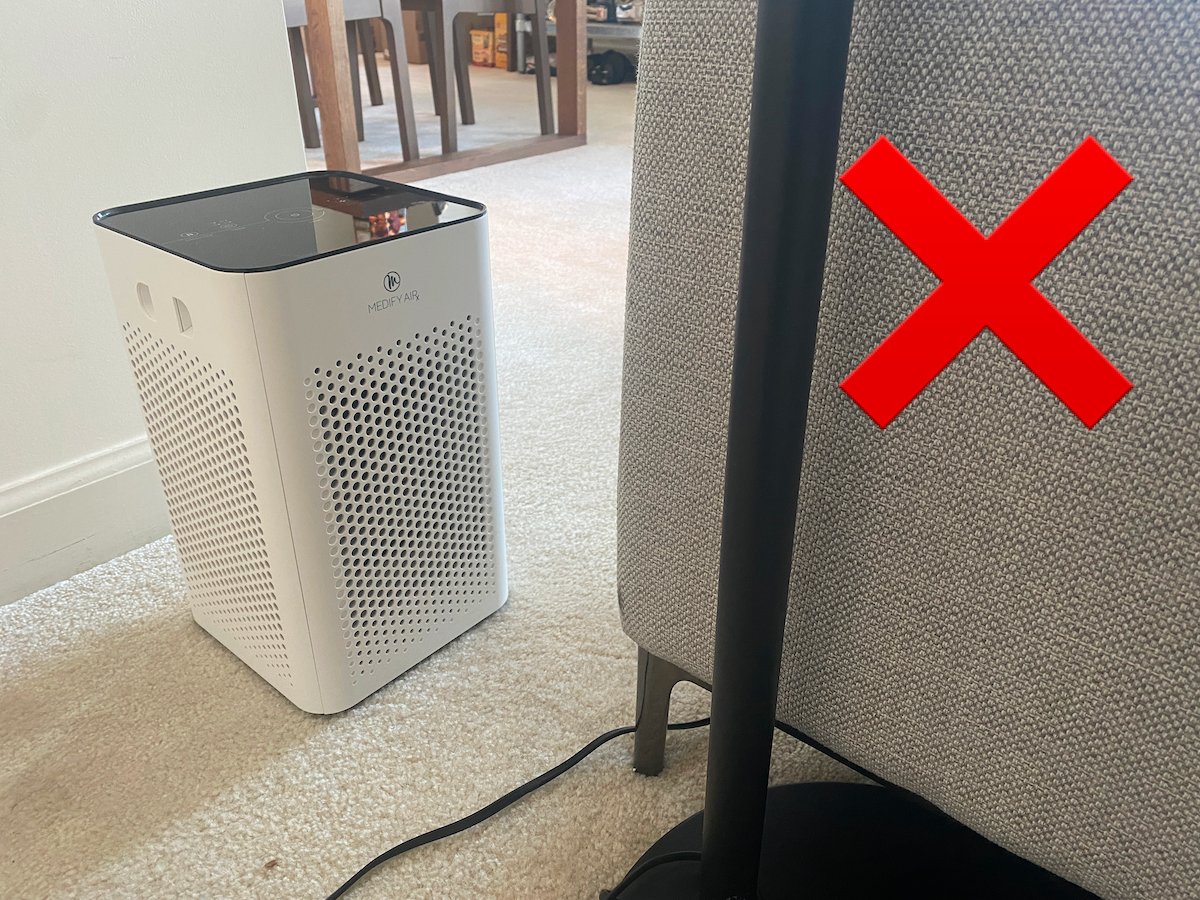
Your air purifier isn't a piece of art you need to hide. In fact, concealing it behind curtains, sofas, or shelving defeats its purpose. If aesthetics are a concern, look for attractive units designed to blend with your décor or consider wall-mounted options.
Mistake #5: Forgetting about room size
The most common mistake is using an air purifier in a room that's too large for its capacity. Even perfect placement can't overcome inadequate power. Check the manufacturer's recommended room size (often listed in square feet) and choose a unit rated for at least the size of your space, if not slightly larger.
Optimizing multiple air purifiers in your home
If you're using multiple air purifiers, strategic placement becomes even more important.
Guidelines for multiple units:
- Place each purifier in a separate room rather than two in one large room (unless the room is very large or has poor air circulation)
- Ensure the intake and exhaust of different units don't blow directly at each other
- Prioritize bedrooms and rooms where you spend the most time
- Choose appropriately sized units for each specific space
- Consider your budget. One larger, high-quality unit may be more effective than multiple smaller, cheaper ones
If you're constantly moving a single purifier between rooms, consider investing in multiple units. The convenience alone makes it worthwhile, and you'll see better overall air quality throughout your home.
FAQs about air purifier placement
Can I put my air purifier on the floor?
Yes, floor placement works fine, especially if you're targeting allergens that settle low. However, elevating it 3-5 feet off the ground can improve circulation and coverage. The best height depends on your specific air quality concerns.
Should I move my air purifier between rooms?
While you can move a portable air purifier between rooms, it's generally better to leave it in one place. Moving it daily means you have to remember to do it (and you probably won't), and each room only gets partial cleaning time.
If air quality is a concern in multiple rooms, consider getting separate units for each space, especially bedrooms where you spend 8 hours sleeping. It's more effective than constantly shuttling one purifier around your home.
How far should an air purifier be from the bed?
Ideally 6-10 feet away, positioned near the head of the bed but not blowing directly on your face. This distance provides clean air in your breathing zone without creating uncomfortable drafts.
Do air purifiers work better in smaller rooms?
Yes, since there's simply less air to clean, the purifier cycles through the room faster. An air purifier rated for 400 square feet will clean a 200-square-foot bedroom much more quickly and can run on lower, quieter settings. You can't really oversize an air purifier, but you can definitely undersize one. When in doubt, go bigger.
Can I place an air purifier under a desk?
It's not ideal because desks limit airflow and circulation. If space is tight, position it next to the desk rather than underneath, and ensure nothing blocks the vents.
Should air purifiers run 24/7?
For best results, yes. Air quality degrades quickly when purifiers are off, so continuous operation maintains consistently clean air. Most modern units are energy-efficient and designed for constant use.
What if my room layout doesn't allow for optimal placement?
Do the best you can with your space. Even imperfect placement is better than none. Prioritize keeping the purifier away from walls (even a few inches helps) and ensuring nothing blocks the vents. You may need a slightly more powerful unit to compensate for less-than-ideal positioning.
The bottom line on air purifier placement
Where you place your air purifier can make or break its effectiveness. The key principles are straightforward:
- Keep it away from walls, corners, and obstructions
- Elevate for better circulation
- Position near pollution sources when possible
Don't overthink it too much though, since even imperfect placement with doors occasionally open will still improve your air quality. The most important factors are choosing the right-sized purifier for your space and running it consistently.
Ready to find the perfect air purifier for your home? Take our quick 5-question quiz to get personalized recommendations tailored to your specific room sizes, concerns, and lifestyle.
Remember that air purifiers are just one part of a comprehensive approach to indoor air quality. Combine yours with regular cleaning, proper ventilation, source control (like not smoking indoors), and humidity management for the healthiest possible indoor environment.